
This story is only available to subscribers.
Register now to read our articles.
Cancel or pause anytime.
Natural Magic
To Dwell in the Center of a Stone
Artist with a Rock Hammer
TO DWELL IN THE CENTER OF A STONE
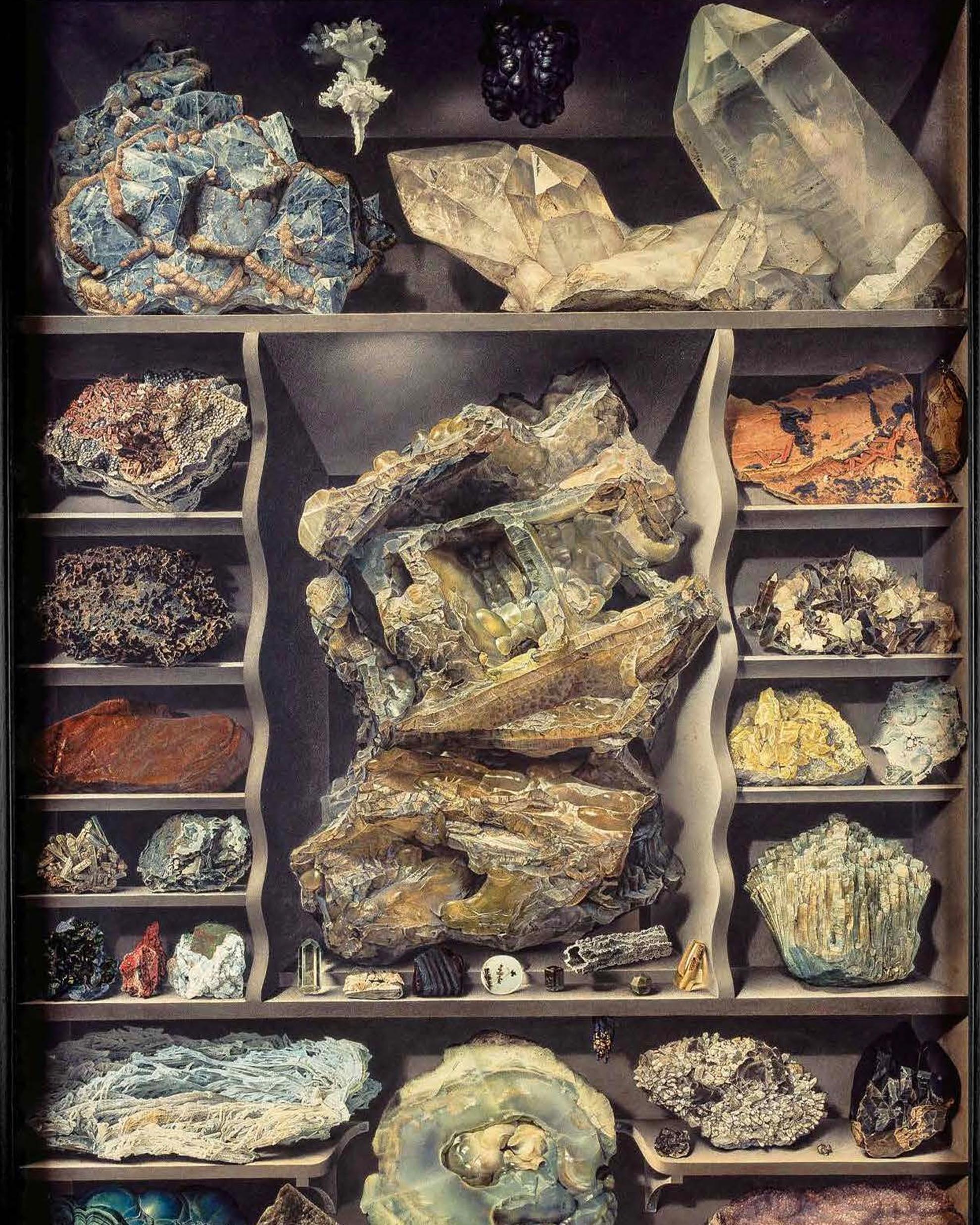
Roger CailloisLooking at stones is very different from looking at paintings and sculptures; a stone is what it is – there can be no missteps, no gawkish sentimentality or moments of dubious taste; in the presence of a stone, an art critic is rendered powerless, disarmed, stripped of her faculties. So is a historian: while paintings and statues can be pigeonholed into the saga of human history, so wearisome and torturous with its senseless outbursts, mineral formations take us back much further, into time out of mind, beyond measurable spans, back to the flamboyant origin stories of the universe. There are stones that embody uncanny prophecies: they came before humankind and perhaps before the gods themselves, yet they display urban skylines and Pliny the Elder tells us of the agate of King Pyrrhus depicting Apollo surrounded by the nine muses as he plays his lyre. Exhibited at Rome’s Villa Medici, the stones in Roger Caillois’ collection are an invitation to lean back into the past, where we can glimpse the earliest origins and hidden models of a “unified field of beauty” that humans have long striven to emulate.


