
This story is only available to subscribers.
Register now to read our articles.
Cancel or pause anytime.
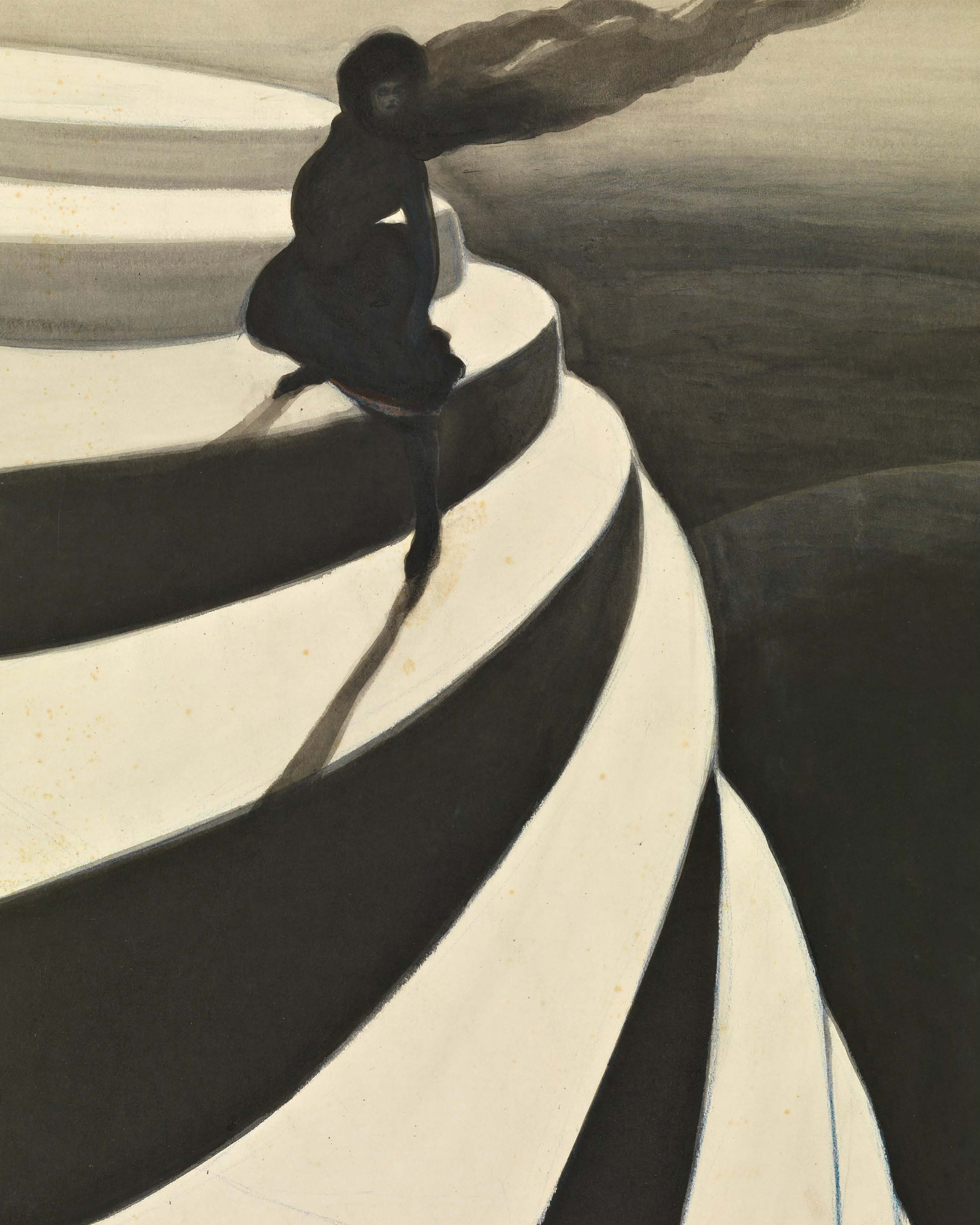
Vertigo at the Spiral’s Edge
VERTIGO AT THE SPIRAL’S EDGE
Giovanni Mariotti“If a stone is dropped from a tower, then that tower will be carried along by earth’s vertiginous rotation, moving many hundreds of yards eastward in the time it takes the stone to fall.” Galileo Galilei uses the word vertiginous here in its ancient connotation of rotational motion. A person whose head is spinning has the impression of perceiving in their dizziness the earth’s own “vertigo,” its rotational orbit through space. In 1908, the Ostend painter Léon Spilliaert produced a work and gave it the title Vertigo. Fifty years later, Alfred Hitchcock gave that same title to one of his films. The artwork depicted a dramatically foreshortened view of a great building that resembled nothing that existed in the real world at the time; in the film’s opening title sequence, mysterious rotating spirals emerged from the depths of a woman’s pupil. Both artist and filmmaker had channeled a sense of disorientation, a spatial hallucination, which they themselves may perhaps have experienced. Along the way, both had stumbled across the spiral – the symbol that best approximates a graphic representation of vertigo.


