
This story is only available to subscribers.
Register now to read our articles.
Cancel or pause anytime.
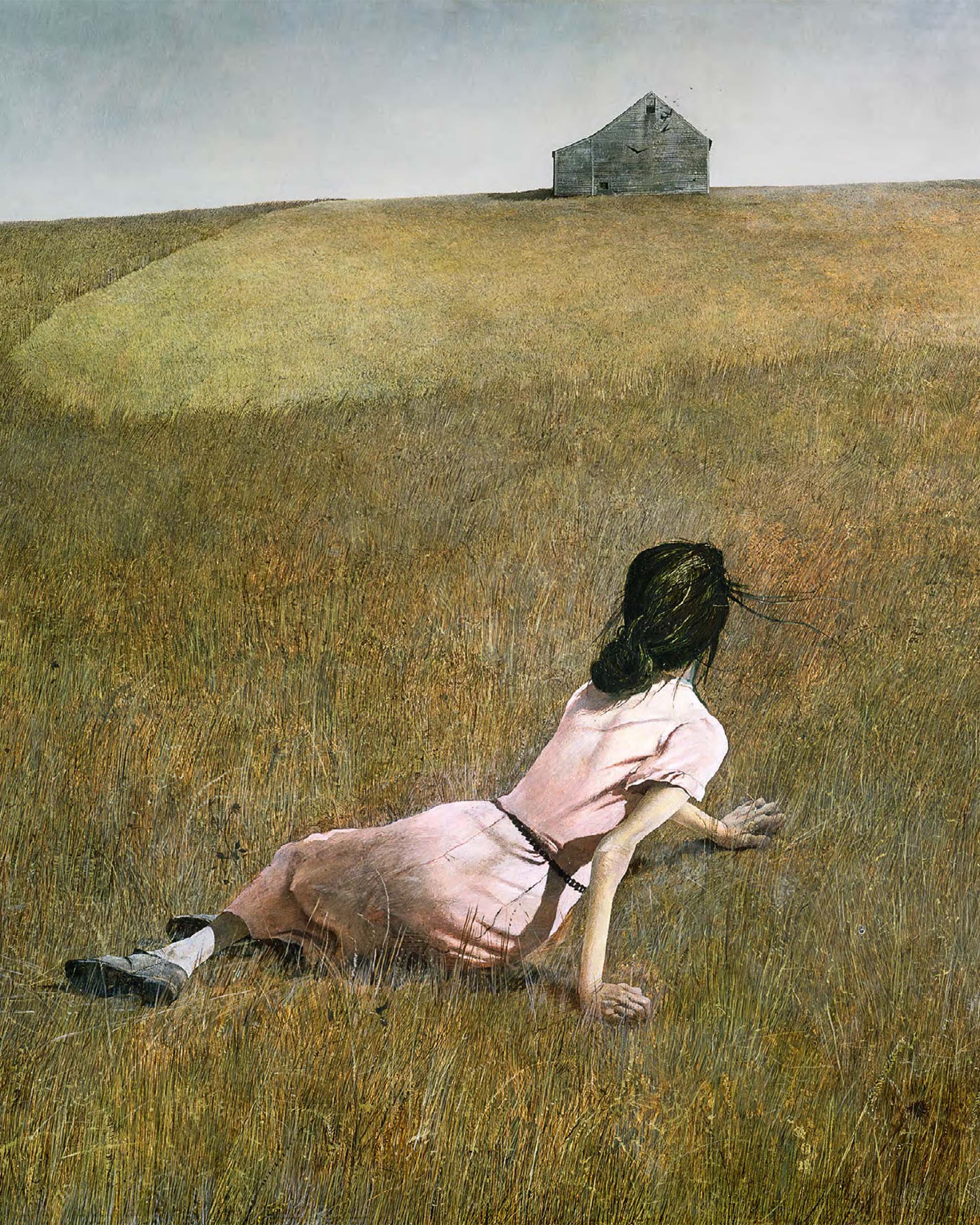
The Unreachable House of the Olsons
THE UNREACHABLE HOUSE OF THE OLSONS
Giovanni MariottiFrescoes, hinged panel paintings, and cupolas had become rare; increasingly, the art of painting consisted in inscribing a character or a story within a rectangular space. In middle class homes, the product was hung on a wall, sometimes set within moldings that were themselves rectangular. Even large crowd scenes or battles were forced to shrink in order to fit within four-sided polygons. This rhetorical rule governed – and in part still governs – image-based narrative in the Western world. The Unreachable House of the Olsons, Giovanni Mariotti’s inaugural effort in his recurring column “Rectangular Views,” makes it clear that the composition of a painting, the manipulation of the distance between a human figure and a house, the blending of a young woman’s body with skeletal arms and legs, all allow a transition from reality to its dreamlike interpretation. The work in question is Christina’s World by Andrew Wyeth: perhaps the most popular painting by any American artist of the twentieth century, along with American Gothic by Grant Wood.


