
Plants possess a certain kind of stoicism that eludes us. Their silence. Their stillness. Their apparent indifference to our presence, our cares, or our suffering. Are these strengths or weaknesses? Deeply grounded in the depths of the present, plants constantly withdraw from us; their very being is shaped by relentless frugality.
Their movements are subtle. Petals and tendrils unfurl on multiple timescales, often imperceptibly. How long is a minute to the leaf of a passion vine? Does the sweetness of summer feel endless to the pistils of a zinnia tickled by a bumblebee? They are distant and remote and yet so close and vividly present. Beneath their leaves, in the intricacy of their branches, through the entanglements of their roots, plants feel – thoroughly and in ways they can’t and don’t care to tell us.
Plants are enmeshed in the intimacy of a cosmological dialogue we can scarcely fathom. When our shared evolutionary history began 1.5 billion years ago, the eukaryote division into plants, fungi, and animals induced a fundamental alteration to the relationship between living organisms and the soil. Plants and fungi opted to stay close and anchor themselves to the moist richness of decaying organic matter. Animals chose mobility. Driven by uncontainable desires, they fled and flew. Always in search of something more or something better, they only committed to the land with a sense of interested partiality; they came and went, at times never returning. Plants chose differently. In their commitment to the soil, plants accepted no compromise. It was all or nothing. Deeply rooted where their seeds sprout, condemned to making the most of the circumstances, plants endure, nurturing a resilience we should both admire and strive to possess. It is their tenacity that shapes their vegetal bodies in such unique ways. Through wind, rain, hail, frost, scorching sun, and fire. Endless nibblings and grazings. Mowing. But as long as enough of a vegetal body survives, it will regrow, right there, in the same spot it knows so well, so deeply. Its body will be different. Its structure and form, like a poem that is written and rewritten by time, will be unique in every instance.
Of all plant families, cacti are among the most cryptic. Spines are much less expressive than leaves. The stiffness of a cactus’ body rarely betrays any inkling of what the plant might feel, need, or want – until it’s too late. In all the vegetable kingdom, cacti are perhaps the most stoic. Their ability to resist is indisputable and beyond compare. Many species of cacti can withstand the harshest conditions, from the scorching heat of the American deserts to the freezing temperatures of the wind-swept Great Plains.
Their movements are subtle. Petals and tendrils unfurl on multiple timescales, often imperceptibly. How long is a minute to the leaf of a passion vine? Does the sweetness of summer feel endless to the pistils of a zinnia tickled by a bumblebee? They are distant and remote and yet so close and vividly present. Beneath their leaves, in the intricacy of their branches, through the entanglements of their roots, plants feel – thoroughly and in ways they can’t and don’t care to tell us.
Plants are enmeshed in the intimacy of a cosmological dialogue we can scarcely fathom. When our shared evolutionary history began 1.5 billion years ago, the eukaryote division into plants, fungi, and animals induced a fundamental alteration to the relationship between living organisms and the soil. Plants and fungi opted to stay close and anchor themselves to the moist richness of decaying organic matter. Animals chose mobility. Driven by uncontainable desires, they fled and flew. Always in search of something more or something better, they only committed to the land with a sense of interested partiality; they came and went, at times never returning. Plants chose differently. In their commitment to the soil, plants accepted no compromise. It was all or nothing. Deeply rooted where their seeds sprout, condemned to making the most of the circumstances, plants endure, nurturing a resilience we should both admire and strive to possess. It is their tenacity that shapes their vegetal bodies in such unique ways. Through wind, rain, hail, frost, scorching sun, and fire. Endless nibblings and grazings. Mowing. But as long as enough of a vegetal body survives, it will regrow, right there, in the same spot it knows so well, so deeply. Its body will be different. Its structure and form, like a poem that is written and rewritten by time, will be unique in every instance.
Of all plant families, cacti are among the most cryptic. Spines are much less expressive than leaves. The stiffness of a cactus’ body rarely betrays any inkling of what the plant might feel, need, or want – until it’s too late. In all the vegetable kingdom, cacti are perhaps the most stoic. Their ability to resist is indisputable and beyond compare. Many species of cacti can withstand the harshest conditions, from the scorching heat of the American deserts to the freezing temperatures of the wind-swept Great Plains.
Their silence is impenetrable, their toughness, unparalleled. Their spines send a clear message: keep out. Cacti are self-protective. Like living fortresses, they defend. Like monuments, they are imperturbable and stand solemn, seemingly absent and aloof, yet wholly present.
The enigmatic presence of cacti has somewhat eluded the intense scrutiny that plant philosophers like Michael Marder and Emanuele Coccia have reserved for other species. Cacti might indeed prove too cryptic, too object-like for a philosophy of vegetal being that mostly aims at foregrounding the sentience, intelligence, and agency of plants. Cacti resist that type of inquiry too, posing perhaps an even more intriguing challenge and inviting us to expand the way we think about plants and our relationship with them.
Oftentimes, art succeeds where philosophy fails, or at least reaches where philosophy has not yet ventured. After all, if approached in a certain way, painting can be a formidable philosophical tool. This has been demonstrated time and again by daring artists such as René Magritte, Frida Kahlo, Lucian Freud, and Kerry James Marshall, to name only a few – a great painting neither simply reproduces reality as we see it nor fabricates it anew. It reconfigures it, sometimes in subtle ways, reaching beneath appearances to make us see reality in ways we have never considered before. Painting can be an encounter capable of reaching further and deeper, beneath the veneers of surfaces and past the banality of the mundane. It casts light where language fails to see.
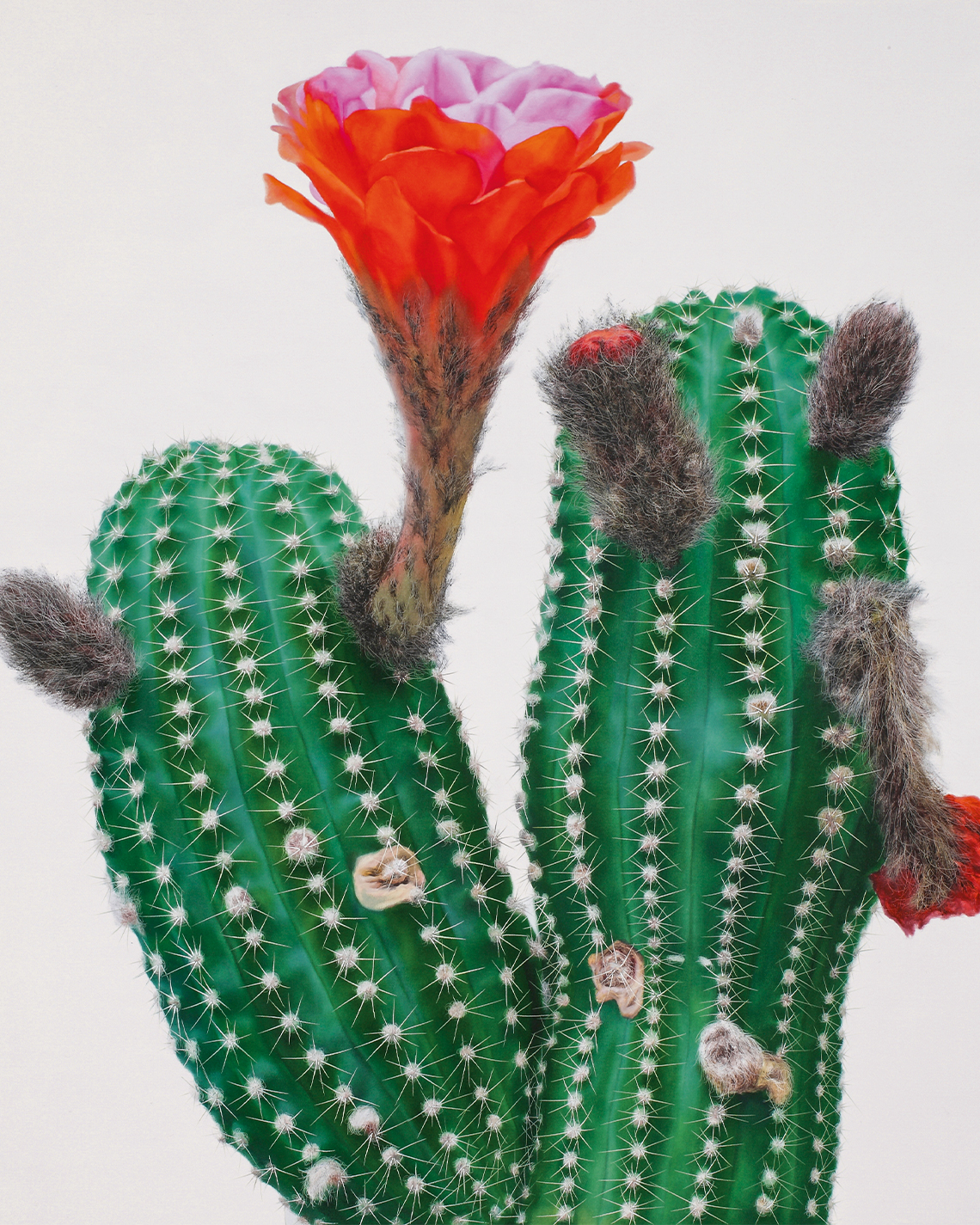
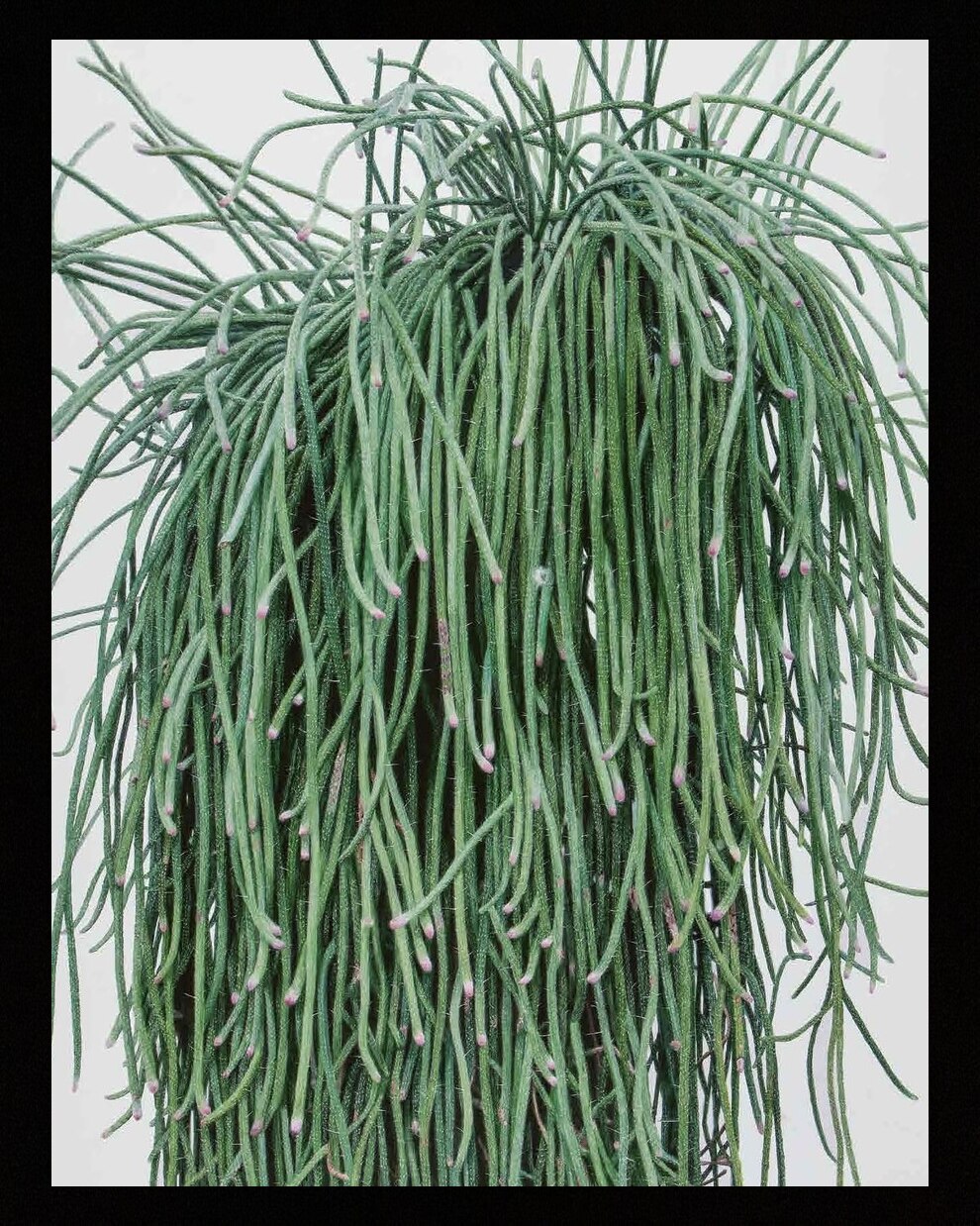
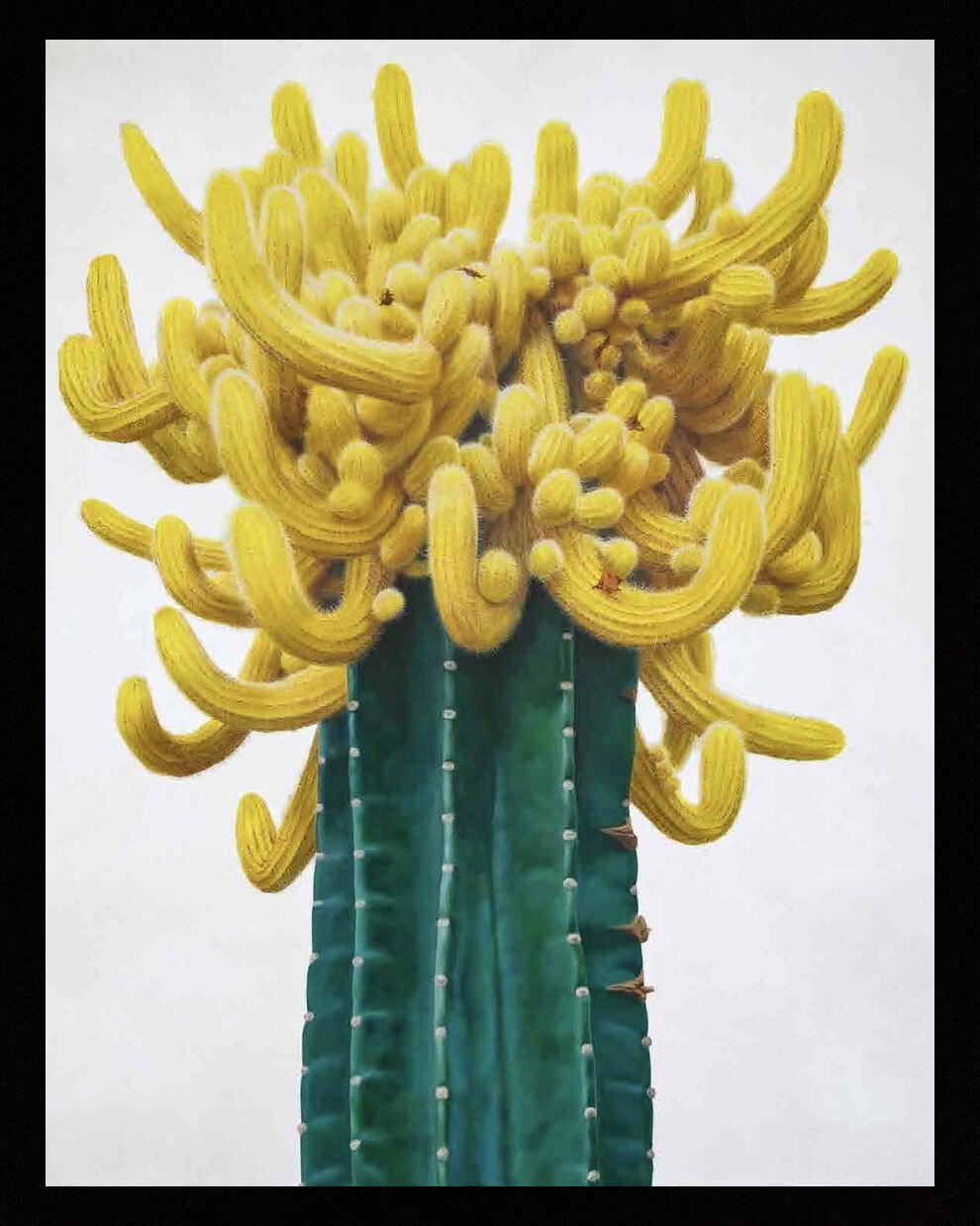
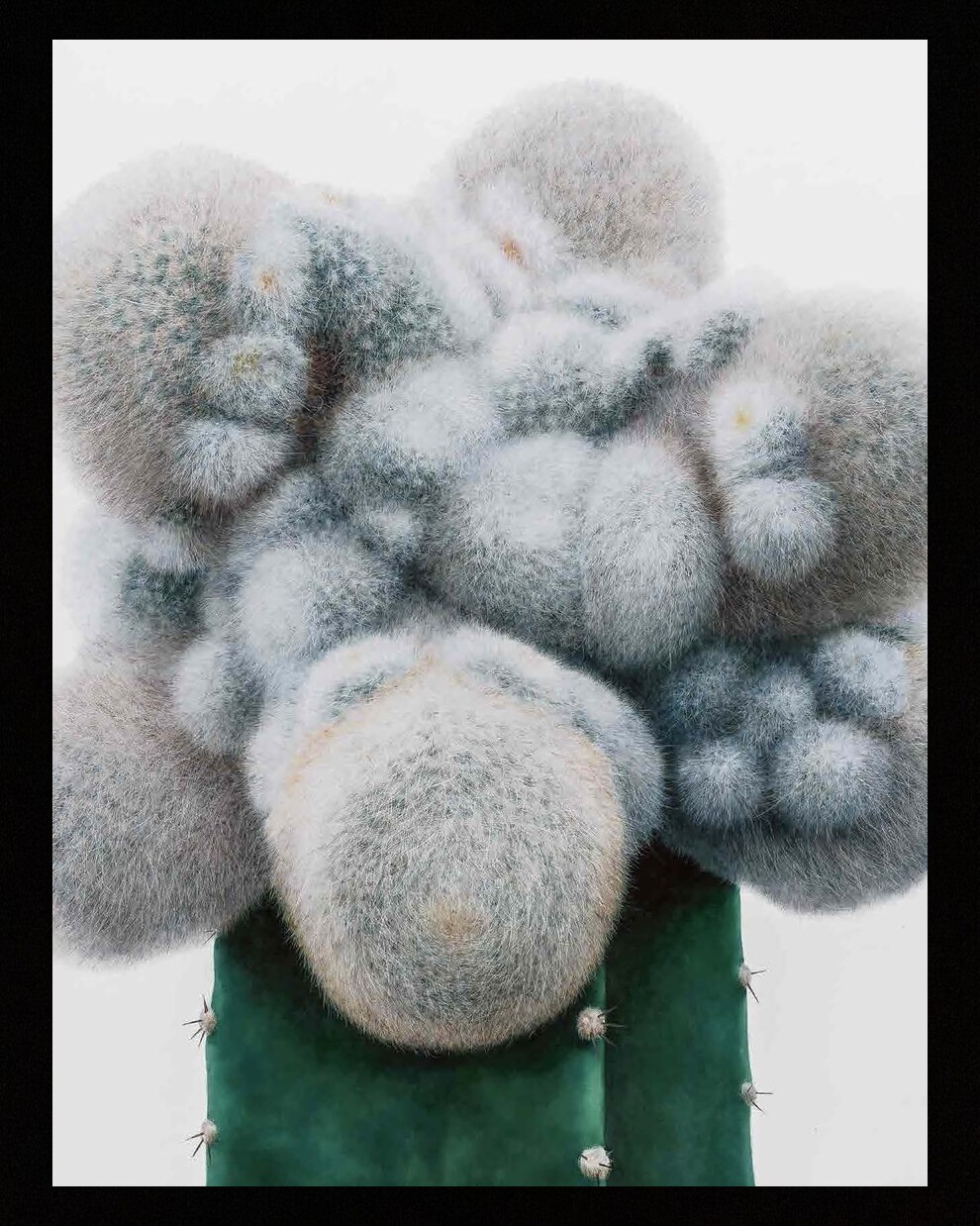
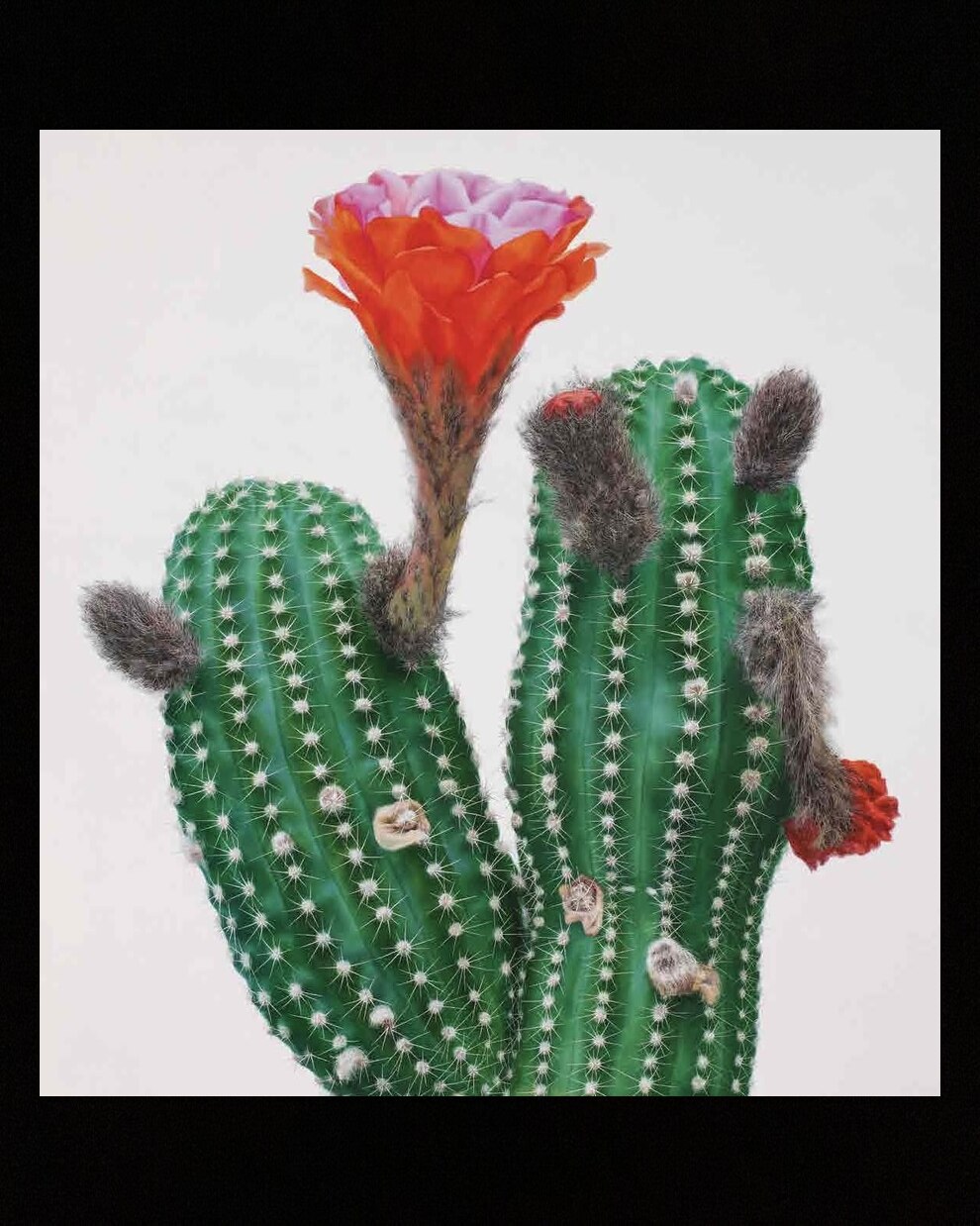
Part of this lineage are the large paintings of cacti by Korean artist Lee Kwang-Ho. Larger than life, measuring up to nearly 10 feet in height, Lee’s hyperrealistic paintings are true portraits of succulent glory. Through enlargement and sheer attention to detail, the painter captures the minutiae that make each cactus an individual in its own right. Lee’s decision to crop the image so that only the upper part of the plants’ bodies are visible, framing them as one would a human bust, accentuates a subtle anthropomorphic tension that never tips too far from the true character of the plant.
By definition, in the history of Western art, the portrait has been considered a human genre. From Egyptian funerary masks to busts of Roman emperors to paintings of kings, queens, and aristocrats, the portrait has held the key to one’s identity. Across the history of art, the most accomplished portraits have been the ones that capture a spirited detail: a glimmer of the sitter’s soul. A true portrait emerges from the singular details that harbor a sitter’s individuality – the arched eyebrow, the distinctive curling of the lip, a glint in the eye – and the artist’s ability to tease them to the surface. But perhaps most importantly, portraits are all about faces. So, by definition, most non-human subjects are excluded.
The enigmatic presence of cacti has somewhat eluded the intense scrutiny that plant philosophers like Michael Marder and Emanuele Coccia have reserved for other species. Cacti might indeed prove too cryptic, too object-like for a philosophy of vegetal being that mostly aims at foregrounding the sentience, intelligence, and agency of plants. Cacti resist that type of inquiry too, posing perhaps an even more intriguing challenge and inviting us to expand the way we think about plants and our relationship with them.
Oftentimes, art succeeds where philosophy fails, or at least reaches where philosophy has not yet ventured. After all, if approached in a certain way, painting can be a formidable philosophical tool. This has been demonstrated time and again by daring artists such as René Magritte, Frida Kahlo, Lucian Freud, and Kerry James Marshall, to name only a few – a great painting neither simply reproduces reality as we see it nor fabricates it anew. It reconfigures it, sometimes in subtle ways, reaching beneath appearances to make us see reality in ways we have never considered before. Painting can be an encounter capable of reaching further and deeper, beneath the veneers of surfaces and past the banality of the mundane. It casts light where language fails to see.
Part of this lineage are the large paintings of cacti by Korean artist Lee Kwang-Ho. Larger than life, measuring up to nearly 10 feet in height, Lee’s hyperrealistic paintings are true portraits of succulent glory. Through enlargement and sheer attention to detail, the painter captures the minutiae that make each cactus an individual in its own right. Lee’s decision to crop the image so that only the upper part of the plants’ bodies are visible, framing them as one would a human bust, accentuates a subtle anthropomorphic tension that never tips too far from the true character of the plant.
By definition, in the history of Western art, the portrait has been considered a human genre. From Egyptian funerary masks to busts of Roman emperors to paintings of kings, queens, and aristocrats, the portrait has held the key to one’s identity. Across the history of art, the most accomplished portraits have been the ones that capture a spirited detail: a glimmer of the sitter’s soul. A true portrait emerges from the singular details that harbor a sitter’s individuality – the arched eyebrow, the distinctive curling of the lip, a glint in the eye – and the artist’s ability to tease them to the surface. But perhaps most importantly, portraits are all about faces. So, by definition, most non-human subjects are excluded.
Individuality and the soul are intimately linked. Since, according to Western philosophy and major religions, animals and plants can’t have souls, they cannot be truly portrayed in the sense that a person can – they only exist on a superficial level, the assumption being that there’s nothing beneath for the artist to extract and distill. Pets are an exception, of course. Renowned for his paintings of horses and dogs, Edwin Henry Landseer became Queen Victoria’s official animal portraitist. His paintings of the queen’s dogs Dash, Hector, and Nero turned the United Kingdom into a nation of pet lovers. Often painted with a subtle hint of humanness, Queen Victoria’s dogs were individuals in Landseer‘s paintings – unequivocally, always.
The individuality of pets emerges from many factors, including our day-to-day closeness with them and the way that they reflect our desires and fears. But what of plants? Is the individual character of a plant indissolubly enmeshed with the time we spend looking at it? Should we look harder? If we looked at a cactus intensely enough, not to find beauty in a classic gardening sense but to discern the traits that make the plant unique, what could we learn?
Lee’s paintings, with their heightened focus, sustained attention to detail, and emphasis on nuances and idiosyncrasies, invite us to discover the identity and character of cacti. They remind us that most of the identity of a plant is superficial. Not in the sense that it is shallow, but that it resides on the surface of leaves, petals, and branches. In order to perceive it, we need to refocus both our gaze and our attention.
While all plants are prone to damage, not all bear the scars of trauma with the same pride as cacti. Their determination to avoid contact with humans and other animals is well founded: cacti’s fleshy constitution is tender. Only the largest saguaros, opuntias, and euphorbias grow a bark, and only when they reach maturity, often only after a hundred years have passed. Cacti scar, easily. Their soft tissue hardens where the wound heals. It dries, often into a golden or greyish brown crust that in most cases never falls off. A perennial memory of their encounters with the world, these scars are essential markers of their identities. Lee faithfully records these traces of individuality in his paintings to heighten the irreplaceability of each cactus. Blemishes are evidence of a lived life that capitalism has taught us to reject and conceal.
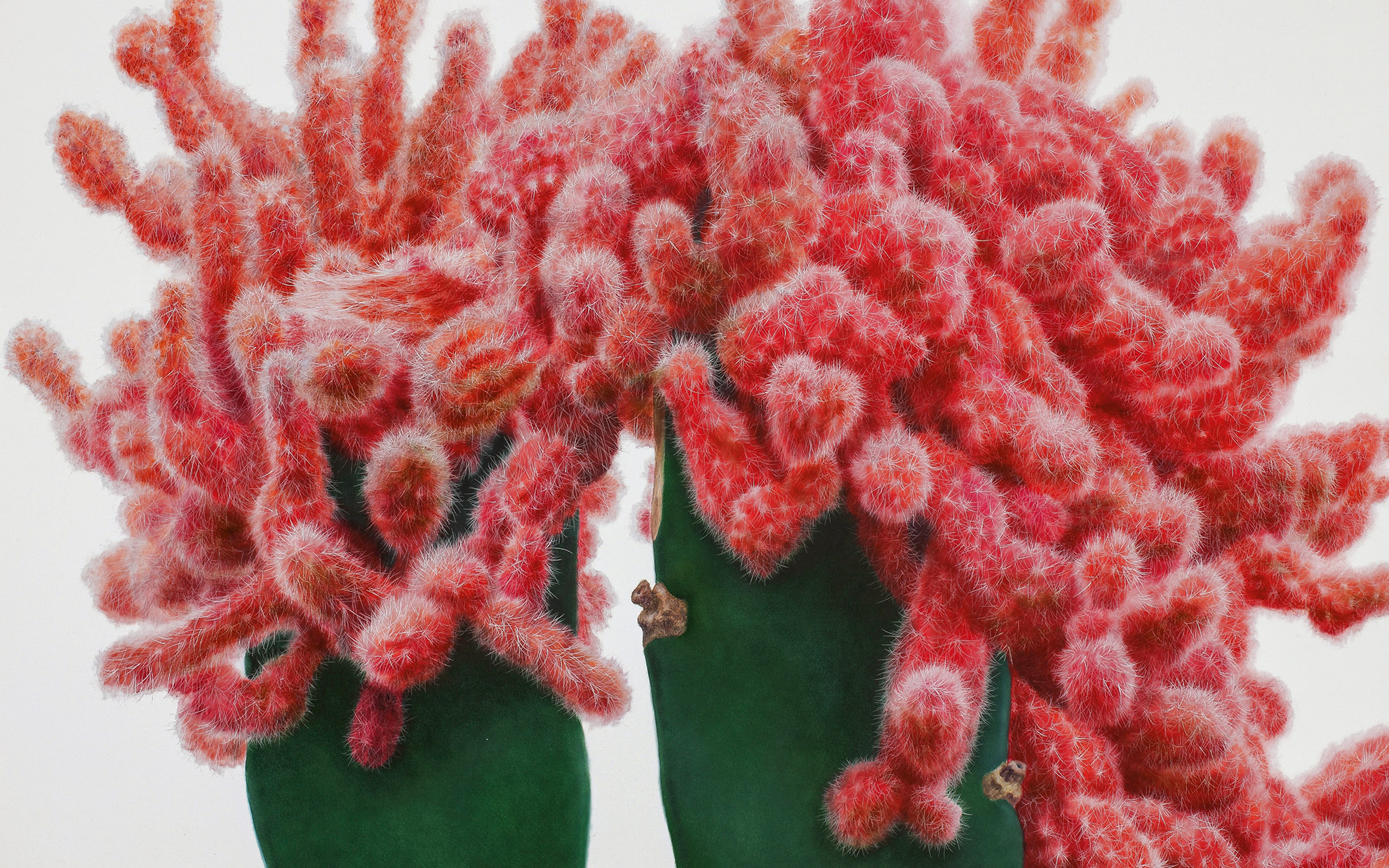
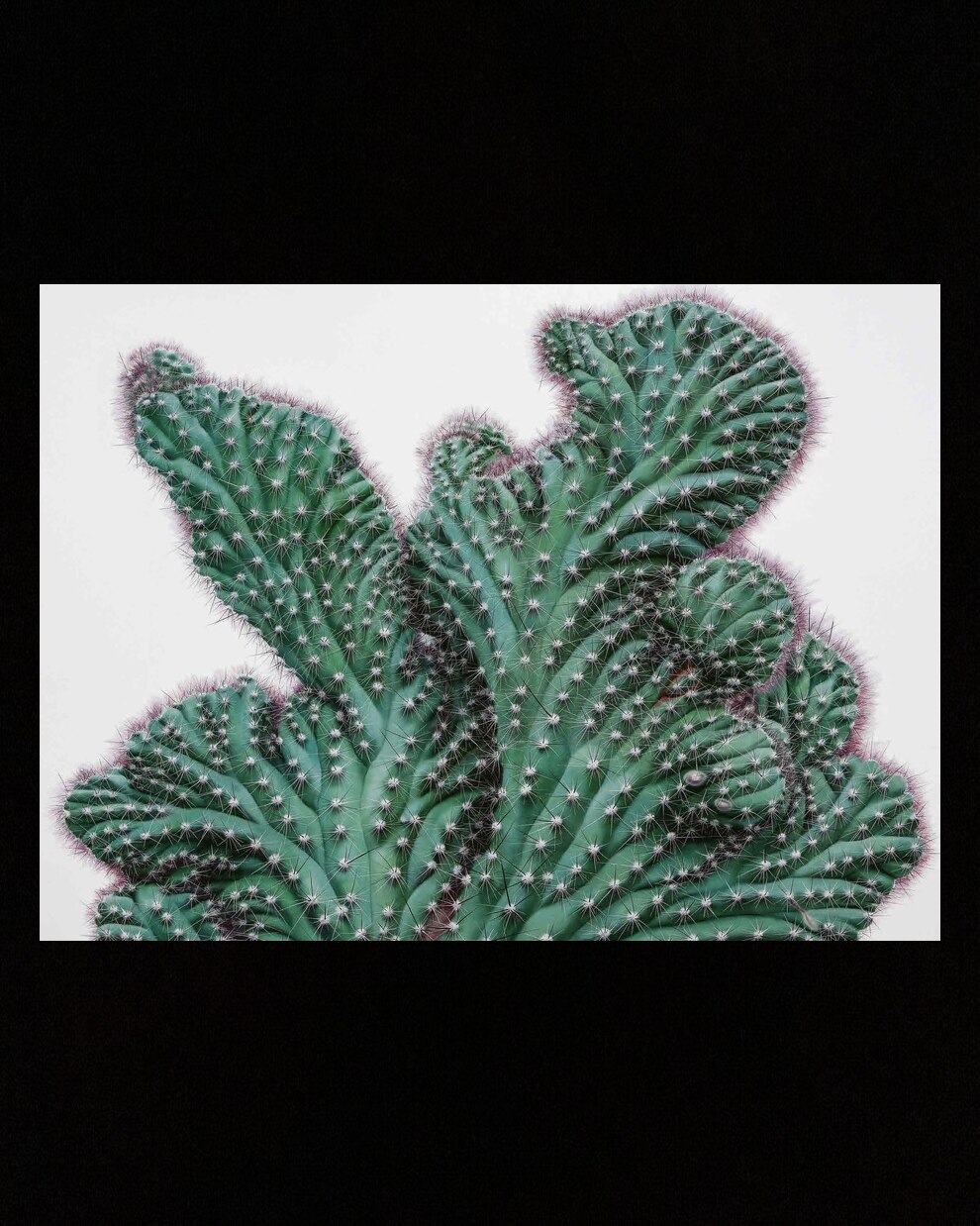
In opposition to the Western tradition of the still-life in which plants are often represented at the height of their beauty, Lee dwells on the importance of spent blooms, which, like scars and blemishes, evince the idea of a livingness that matters beyond our aesthetic appreciation. These cacti are beautiful not because they are perfect or because they have been immortalized in their prime but because they are naturally imperfect; because their bodies have been co-authored with time into a unique and unequaled living poetic expression.
Lee has been focusing on the poetics of surfaces for many years. It is rather meaningful that his “Cacti” series emerged in the mid-2010s following years of work on a project titled Inter-view (2006). In the paintings in that series, the artist painstakingly rendered the nuances of textures and details of people’s skin to emphasize his belief that identity is more than something we harbor deep inside of us. This is especially true in the context of an encounter with a stranger or someone we do not know very well, or perhaps, as in the case of cacti, that we can know only so well. Emerging from these philosophical foundations, Lee’s series of cacti further explores this very contingency, pushing it to an extreme. The cryptic and yet highly idiosyncratic identities of cacti narrow our perceptual, emotional, and ethical bandwidths to produce ever narrower and subtler considerations.
This dedication to see more and deeper into what might at first seem like an irrelevant flaw is deeply grounded in the Korean notion of mak, a predisposition to engage with a certain matter-of-factness, a rejection of perfection, a celebration of humility, and a fondness for irregularities and unevenness which, on deeper inspection, can reveal a rich emotional resonance. These qualities are part of a broader cultural notion that something meaningful might manifest from openness and unscriptedness; an honest void of pretension that finds its fullest expression in the essence of bium, a naturalistic understanding of the world in which the essential Confucianist dimensions of emptiness and silence allow us to meaningfully connect with the world.
Western art has nurtured a very difficult relationship with these concepts of imperfection, emptiness, and silence. Much of the past two thousand years of artistic production has demonstrated the importance of preserving beauty and perfecting nature. The horror vacui, or fear of emptiness, that pervaded Baroque architecture and art was a shift from the restrained and balanced aesthetics of the Renaissance to a more dramatic, emotional, and ornate style that sought to overwhelm both the viewer’s senses and mind. Painters such as Bosch, Brueghel, and Duvet greatly capitalized on the spectacular effects of horror vacui as did Rubens and Tiepolo and architects Borromini and Bernini.
Lee has been focusing on the poetics of surfaces for many years. It is rather meaningful that his “Cacti” series emerged in the mid-2010s following years of work on a project titled Inter-view (2006). In the paintings in that series, the artist painstakingly rendered the nuances of textures and details of people’s skin to emphasize his belief that identity is more than something we harbor deep inside of us. This is especially true in the context of an encounter with a stranger or someone we do not know very well, or perhaps, as in the case of cacti, that we can know only so well. Emerging from these philosophical foundations, Lee’s series of cacti further explores this very contingency, pushing it to an extreme. The cryptic and yet highly idiosyncratic identities of cacti narrow our perceptual, emotional, and ethical bandwidths to produce ever narrower and subtler considerations.
This dedication to see more and deeper into what might at first seem like an irrelevant flaw is deeply grounded in the Korean notion of mak, a predisposition to engage with a certain matter-of-factness, a rejection of perfection, a celebration of humility, and a fondness for irregularities and unevenness which, on deeper inspection, can reveal a rich emotional resonance. These qualities are part of a broader cultural notion that something meaningful might manifest from openness and unscriptedness; an honest void of pretension that finds its fullest expression in the essence of bium, a naturalistic understanding of the world in which the essential Confucianist dimensions of emptiness and silence allow us to meaningfully connect with the world.
Western art has nurtured a very difficult relationship with these concepts of imperfection, emptiness, and silence. Much of the past two thousand years of artistic production has demonstrated the importance of preserving beauty and perfecting nature. The horror vacui, or fear of emptiness, that pervaded Baroque architecture and art was a shift from the restrained and balanced aesthetics of the Renaissance to a more dramatic, emotional, and ornate style that sought to overwhelm both the viewer’s senses and mind. Painters such as Bosch, Brueghel, and Duvet greatly capitalized on the spectacular effects of horror vacui as did Rubens and Tiepolo and architects Borromini and Bernini.
While it is impossible to accurately pinpoint the cultural matrix that gave rise to horror vacui in the West during the seventeenth century, it is plausible to conceive of the compulsive need to fill empty space as a compensatory practice: an emotional need to conceal a kind of existentialist emptiness and disenchantment with life itself. In a time of colonialist exploitation, wars, and increasing religious and governmental discord, as pandemics decimated populations even as scientific knowledge advanced and the Industrial Revolution resulted in ever greater alienation, the void was also associated with the negation of God. Filling it was essential and comforting. The silence of plants in particular came to be imbued with Christian morals and values, especially in still-life paintings. Symbolic meanings were derived from sacred scripture and biblical apocrypha. Daffodils – some of the earliest flowers to return every spring – spoke of rebirth and resurrection. Daisies told stories of innocence, beauty, and love. Strawberry flowers represented chastity. Cherries, red carnations, and poppies evoked the bloody passion of Christ. At times, a combination of both color and scent could be woven into a symbol: the whiteness and fragrance of lemon blossoms, lily of the valley, or jasmine, for instance, incarnated the purity of the Virgin. Herein lies a paradox: Western art invited us to look at plants only so that we could hear our own voices. Inherent in the symbolic insistence of traditional still-life paintings is the conviction that plants, on their own, are never enough. Unless, that is, they express our thoughts, fears, and hopes.
Some might be wondering if engaging with these oblique philosophical questions about identity might be at all productive at a time in which identity politics seem more firmly rooted in notions of race and gender. Lee’s paintings, however, push against these established cultural frames of reference, allowing us to fine-tune our approaches to identity to envision a more nuanced range of factors that current discussions appear to overlook. Ultimately, Lee’s portraits of cacti invite us to embrace markers of distinction and the kinds of imperfections that have become synonymous with wrongness, defects, and shame in a popular culture obsessed with perfection and flawlessness. It is in this context that Lee’s portraits open up a valuable space in which we can begin to read cacti’s identities. His philosophical approach to painting fully respects vegetal silence and he never imposes our voices onto the plants. Instead, he allows their true identity to emerge through a careful interplay of irregularities and imperfections enshrined in the silence that characterizes the essence of their being.
Giovanni Aloi
Dr. Giovanni Aloi is an art historian, editor, and curator specializing in environmental politics and the representation of nature in art. Aloi has published numerous books, including Art and Animals (2011), Speculative Taxidermy (2018), Why Look at Plants? (2019), and Lucian Freud: Herbarium (2019). He has contributed to BBC radio programs and worked at Whitechapel Art Gallery and the Tate Galleries in London. He is the U.S. correspondent for Esse Magazine, and is a lecturer at the School of the Art Institute of Chicago.
All of the paintings reproduced here are by Lee Kwang-Ho and appear courtesy of the artist and the Johyun Gallery in Seoul.
All of the paintings reproduced here are by Lee Kwang-Ho and appear courtesy of the artist and the Johyun Gallery in Seoul.
BIBLIOGRAPHY
- Dan Torre, Cactus (Islington: Reaktion Books, 2017).
- Michael Marder, Plant-Thinking: A Philosophy of Vegetal Life (New York: Columbia University Press, 2013); Michael Marder, Grafts (U. of Minnesota Press, 2016); E. Coccia, The Life of Plants (Hoboken, NJ: John Wiley & Sons, 2019).
- Susan Walker and M. L. Bierbrier, Ancient Faces: Mummy Portraits from Roman Egypt (London: British Museum Press, 2020).
- George P. Klubertanz. Philosophy of Human Nature (Piscataway, NJ: Editions Scholasticae, 2014.
- René Descartes, 1637. Discourse on the Method (New York: Cosimo, 2008).
- Diana Donald, Picturing Animals in Britain, 1750-1850 (New Haven: Yale University Press for The Paul Mellon Centre for Studies in British Art, 2007).
- Jenny Zhang, “Interview: Vivid Details of Exotic Cacti Unexpectedly Come to Life in Hyperrealistic Paintings,” My Modern Met, June 16, 2015. https://mymodernmet.com/kwang-ho-lee-touch-cacti/.
- Byoungsoon Cho, “Mak and Bium: Imperfection and Emptiness in Korean Aesthetics,” in Architectural Review, January 26, 2018. https://www.architectural-review.com/essays/mak-and-bium-imperfection-and-emptiness-in-korean-aethetics.
- Lucia Impelluso, Nature and Its Symbols (Los Angeles: J. Paul Getty Museum, 2004).


